
3D Printing & Additive Manufacturing: From Digital Design to Physical Innovation
Fee: 450€
Duration days / hours: 5 days / 25 hours
For any inquiries, further details, or program customization, please contact us at info.eu@eduact.org.

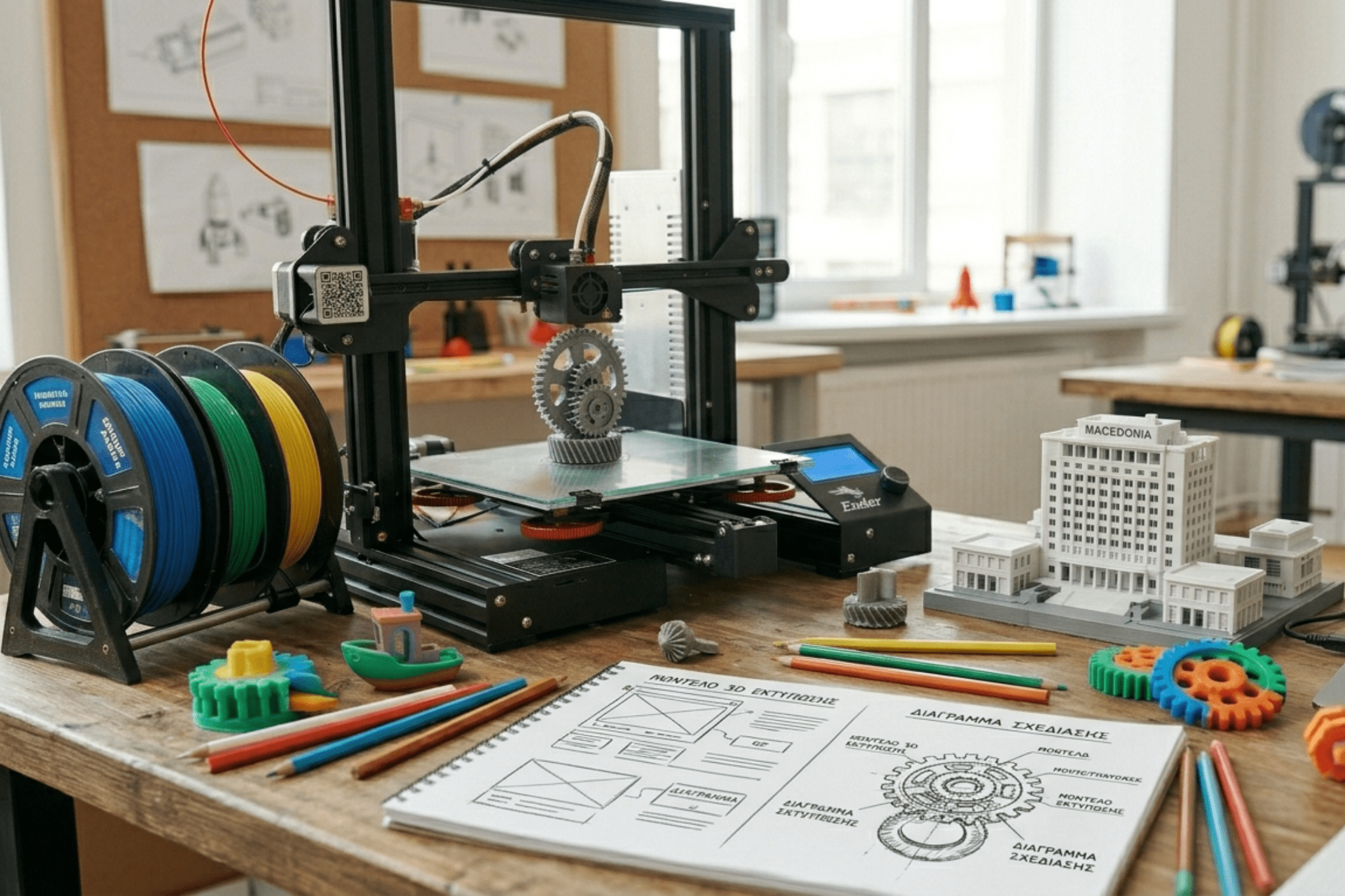
Additive manufacturing is transforming the way products are designed, developed, and produced across industries ranging from engineering and healthcare to architecture and product design. By enabling rapid prototyping and customized manufacturing, 3D printing has become one of the most innovative technologies of the Industry 4.0 era.
This hands-on course introduces participants to the complete additive manufacturing workflow, guiding them from digital design concepts to the creation of physical prototypes. Through practical activities, students will learn how to design three-dimensional objects, prepare files for printing, operate 3D printers, and evaluate the functionality of their creations.
By combining creativity, engineering thinking, and digital fabrication skills, participants will gain valuable experience in one of today’s most rapidly growing technological fields.
- Introduce participants to additive manufacturing technologies and applications.
- Develop 3D design and computer-aided design (CAD) skills.
- Familiarize students with 3D printer operation, calibration, and maintenance.
- Explore materials, printing parameters, and manufacturing processes.
- Promote creativity, innovation, and engineering design thinking.
- Develop rapid prototyping and iterative problem-solving skills.
- Encourage collaboration through project-based learning activities.
At the end of the course, participants will be able to:
- Understand the principles and applications of additive manufacturing.
- Design three-dimensional models using CAD software.
- Prepare digital models for fabrication using slicing software.
- Operate and calibrate 3D printers safely and effectively.
- Select appropriate printing settings and materials for specific projects.
- Create and evaluate functional prototypes.
- Apply design thinking methodologies to engineering and innovation challenges.
- Secondary school students (14+)
- STEM-focused student groups
- Vocational education and training (VET) learners
- Students interested in engineering, product design, and manufacturing
- Young innovators and makers
Day 1 – Introduction to 3D Printing and Additive Manufacturing
- Overview of additive manufacturing technologies
- Applications across industry, healthcare, architecture, and education
- Understanding 3D printer components and operation
- Introduction to design thinking and prototyping
- Hands-on exploration of printed objects and case studies
Day 2 – 3D CAD Design Fundamentals
- Introduction to CAD software
- Creating sketches and three-dimensional models
- Object manipulation and design optimization
- Designing original 3D objects
- Practical design exercises
Day 3 – Slicing and Printer Operation
- Preparing models for fabrication
- Introduction to slicing software
- Understanding print settings and parameters
- Printer calibration and maintenance
- First individual printing projects
Day 4 – Rapid Prototyping Laboratory
- Design refinement and iterative development
- Material selection and manufacturing considerations
- Printing functional prototypes
- Troubleshooting common printing issues
- Testing and improving prototype performance
Day 5 – Innovation Challenge and Prototype Showcase
- Team-based engineering design challenge
- Final prototype production and post-processing
- Product testing and evaluation
- Project presentations and peer feedback
- Course evaluation and certification ceremony